Antique, Vintage, Folk & Formal — Objects, Art, Furniture & Curiosities —
In-House Letterpress Stationery Franklin, NY / Western Catskills
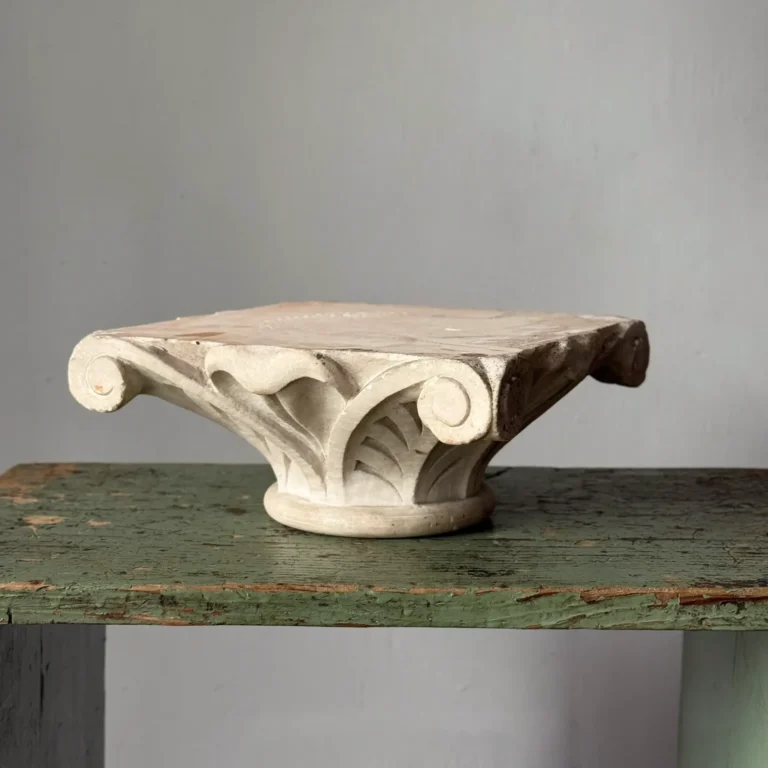
Victorian Memorial Sculpture Model for a Child
This plaster carving from northern Vermont is a Victorian memorial sculpture model — a working maquette for the grand monuments Victorians raised to their loved ones (and themselves) after passing. Evidence of the type dominates cemeteries across America, growing especially large and ornate near the cities that boomed after the Civil War. As a way of remembering people in their most ideal form, virtually all imitated Greek and Roman classical sculpture in some way.
Whether 19th or very early 20th century, the purpose here is undeniably funerary. It’s a common, recognizable theme from any cemetery visit — so common and iconic, in fact, that it was eventually mass produced by metal casters of the period.
Small maquettes like this one, carved from soft plaster, served as a tangible, visual contract between carver and client. Adjustments could be made to fit the client’s specific wishes, while the sculptor worked out the difficulties of the final piece — undoubtedly to be carved in marble.
Dimensions
6 inches long
Condition
Surfaces exhibit discoloration from handling. Minor losses along the outside edge below the child's feet.
$225 (includes shipping within the continental US)
10% of all in-store and online retail sales will be redirected to local not-for-profits. Details here.